Scenes
A scene = one idea on screen. You fill in its words and pictures.
 One clickA hand comes onto your screen and clicks, in time with the music: the screen takes the press, and a label is written to say what it does. Then the hand moves on and the label lights up until the end.
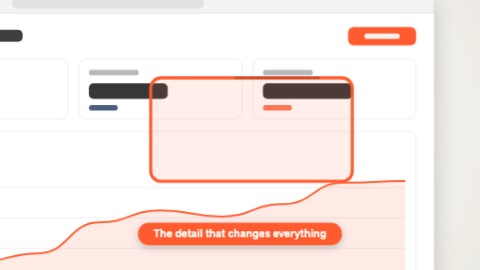 Zoom on a detailThe whole screen first, then the camera dives at once onto the detail that matters, in time with the music, and keeps moving in gently: a frame is drawn round the detail and its caption is written.
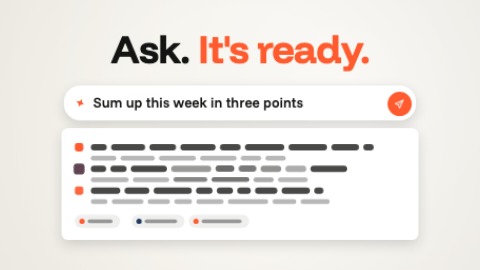 Prompt and answerThe title arrives in two halves, from above and from below, and bounces. The request is typed faster and faster into its field, is sent, and the answer streams under it: bars in your colours that turn into lines of text.
 Three screens fanned outThree captures rise one after the other and open like a fan, the middle one in front: each arrives tinted with your colour, then finds its own again, and they light up in turn, in time with the music.
 NotificationsNotifications arrive in time with the music in front of your blurred screen, closer and closer together: each one pops from below a little too wide, dips, takes its size and pushes the earlier ones up. Its words land right after, then the icons ring in turn.
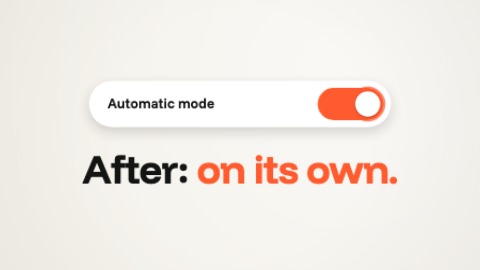 The switchA hand flips a switch, in time with the music: it gives under the finger, and the “before” line gives way to the “after” one, written word by word. The switch, now on, keeps living: a halo leaves it, a glint crosses it.
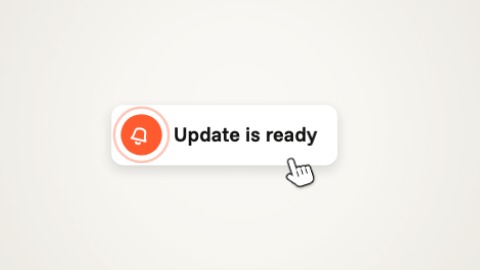 A single notificationOne notification alone on the ground, as wide as what it says: it slides into place, its message writes itself word by word and the card grows with it, its icon rings in time with the music. Then a hand tumbles in, lands under the line and runs back along the words, which lift off one by one.
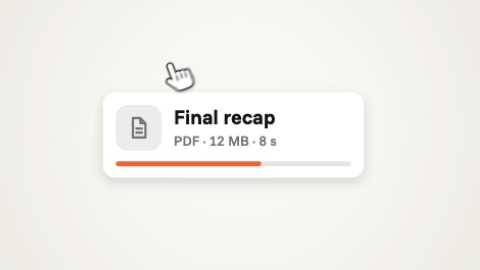 A file on its wayOne file card alone on the ground: its tile drops into place, its name writes itself word by word, its details follow, and its bar runs as far as you say and stops there (at 100 the tile ticks itself). A hand tumbles in above the card, comes down on the name and sweeps it away. Held longer, the bar gets there push by push, in time with the music.
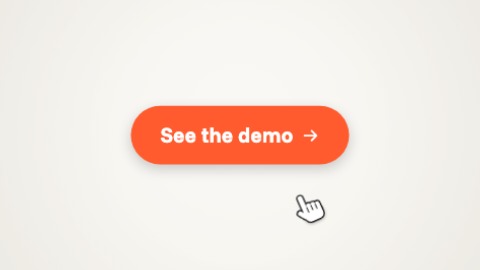 A single buttonOne button alone on the ground: it forms with a spring, takes its label word by word and swells as the words land, then breathes. A hand comes up from below, turning, and presses it in time with the music: the button jumps and takes off through the top of the picture, faster and faster.
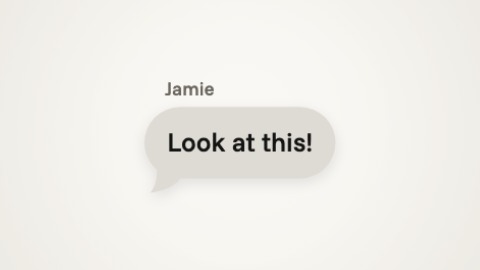 One bubbleA single message bubble on the ground: it arrives tilted and blurred, swings into place and bounces softly. Its words land almost together, in your colour, then settle; above it the sender's name types itself letter by letter. Then the bubble grows, faster and faster, and rushes at the camera.
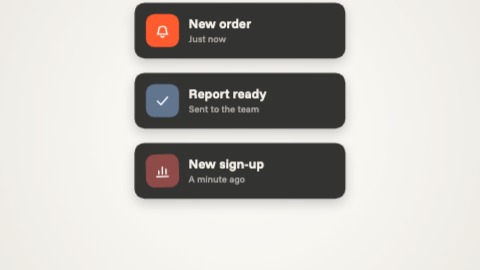 A column of notificationsNotifications pile up on the ground: each one pops from below, a little too wide, dips, takes its size and pushes the earlier ones up. Its words land right after, one by one. They arrive in time with the music, closer and closer together, and the column never stops climbing: at the end it grows and rushes out through the top of the frame.
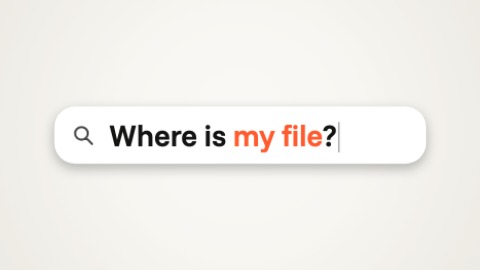 A search in one gestureA line draws itself, takes your colours, swells into a capsule and closes into a dot; a search field comes out of a blur while the camera pushes in twice; the dot jumps over it, drops in and becomes its caret. Then your sentence is typed faster and faster: the camera runs after the caret, whips, throws itself onto the emphasised words, and pulls back to show the whole line. Before a cut the field stretches into a banner across the frame and closes. Unlike “Typed question” and “Search and results”, the field is made in front of you and the camera follows the typing.
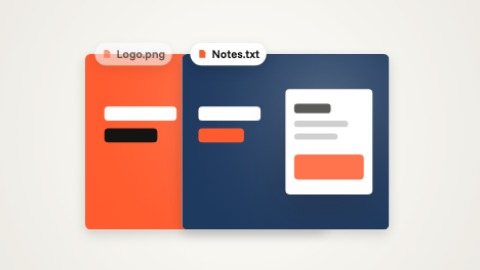 A burst of resultsA small status chip: an outline runs round it, a word is typed in it, a ring spins beside it. Then it opens into the first result, a card first tinted with your colour that takes its true colours; the next ones whip in from the side, in time with the music, each over the one before, which slides behind and fades. Your pictures, or example cards while there are none. Unlike “Search and results”, no field and no list: cards that chase one another.
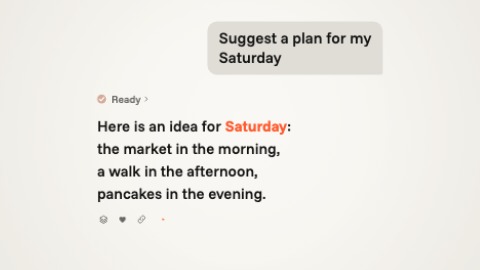 The assistant at workA request types itself in a card and a hand presses send: the card melts into its message, blurred and coloured, and lands in the upper right. Under it the steps of the work come in time with the music and tick one by one, then the list folds into one line and the answer writes itself in its place: bars in your colours that turn into the text, or a table that fills cell by cell. The page never stops rising.
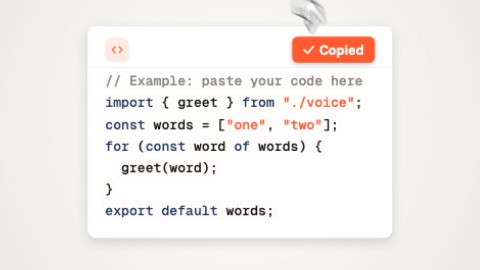 Code cardA card of code rises into the picture and your snippet types itself in a breath, one line after the other, too fast to be read: the speed is the point. Its keywords and its strings then take their colours in a wave, and a hand comes to press the button, in time with the music: it answers with a tick and its second word. Unlike “Terminal”, nothing runs: this is code you show, and copy.
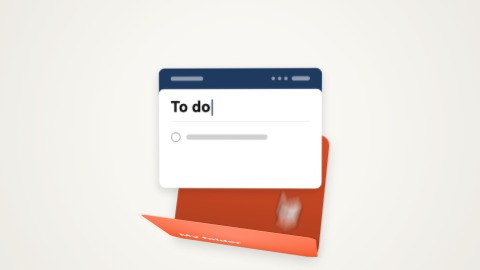 A folder opensA folder in your colour slides into place, a hand takes it, its flap opens towards you and what it holds comes out: a note, whose title types itself while it rises, or your pictures, which burst out, hang for a moment and drop into a tidy grid in a panel that stretches. The folder falls away, and only the note or the pictures are left.
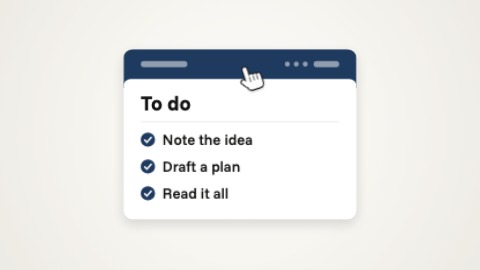 A list that writes itselfOne note alone on the ground, and its list writing itself in front of you: each row comes word by word, in time with the music, then its box ticks itself, and the card comes a little closer at each row. A hand lands on the band and drags the card down: it closes into a bar and leaves. Unlike “Checklist”, the rows are not there at the start: they get written.
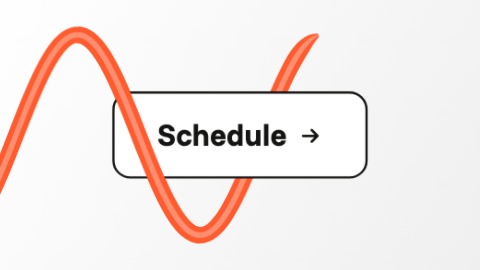 Run of buttonsA run of buttons, one per card: the picture cuts in time with the music, faster and faster. The button keeps its place and its size, and each card has its own backdrop and its own small animation: an interface, glass over a colour that flows, ripples, a ribbon that passes in front and behind, a wall of bricks in which it is the lit one. The last card beats once and leaves its button between four corner marks.
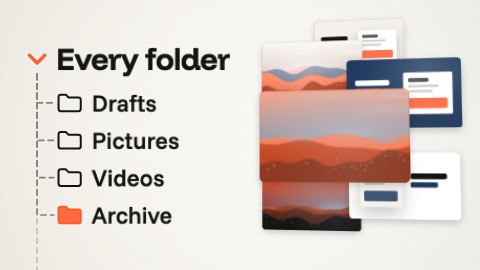 TreeA menu that unfolds row by row, in time with the music: a dashed line leaves the title, the row arrives at its end all at once, and the whole menu steps up. Beside it, your pictures stacked in space change places at each new row, then go on turning slowly. Write one line per row, with a dash in front of those filed under the one before. A short scene shows fewer rows, a long one shows them all.
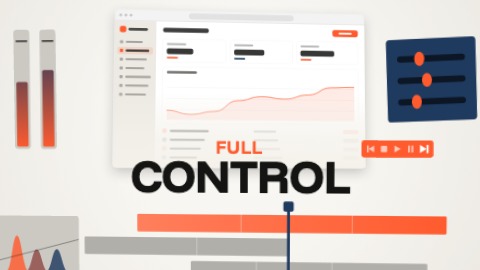 Control roomYour title in the middle of an interface at work: a window with your screenshot, turned in space, level meters that jump in time with the music, sliders that travel, three bars and a marker running along them, a small histogram that breathes. Half-way the title changes: solid bars cover its words for an instant, the slider panel tumbles a quarter turn, and the next title appears. Write two titles: the last word of each is set large, the rest small above it.
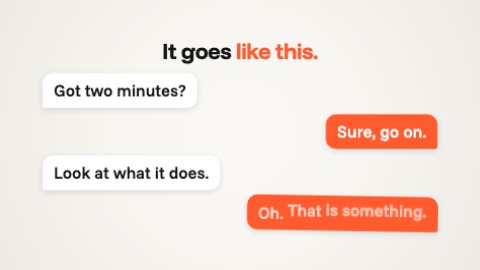 ConversationMessages answer each other, left then right: three small dots, and each bubble pops up on a beat.
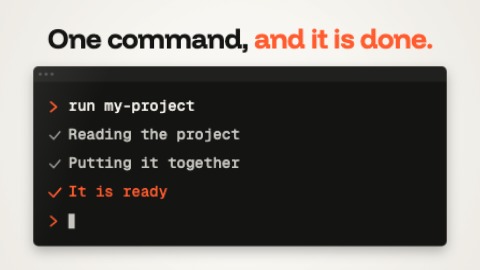 TerminalA command is typed faster and faster into a terminal and runs in time with the music: its lines of output drop at once, one a frame, then tick themselves one after the other; the last, in your colour, says it is done.
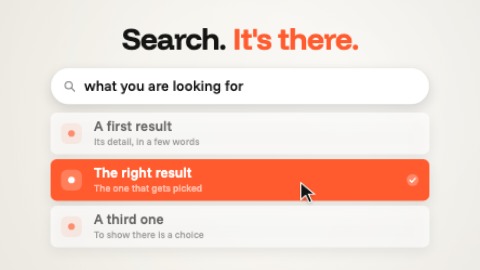 Search and resultsA search is written into a field, word after word; the results whip in from the side one after the other, in time with the music, each one jostling those before it. The pointer picks one and presses: it takes your colour.
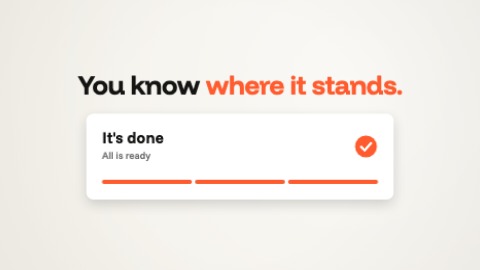 In progress, then doneA card says where things are: the bar fills, the words change at each step, and the last one ticks itself.
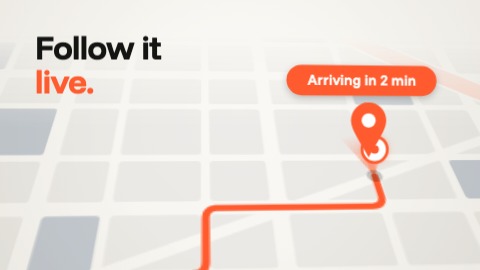 Route on a mapA map in your colours, lying in space: the pin drops, its label is written, and a marker runs the route in time with the music, from one crossing to the next, the camera swinging round with it. Three viewing angles.
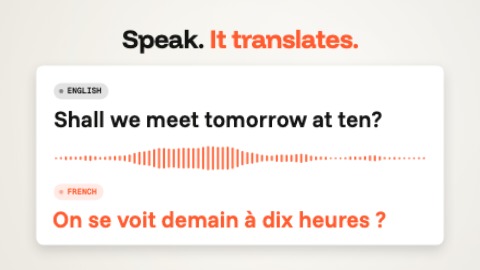 Two languages, liveA sentence is said and written at once; a wave runs under it, and the same sentence comes out below in another language, a few words behind. The wave then swells again in time with the music, until the end.
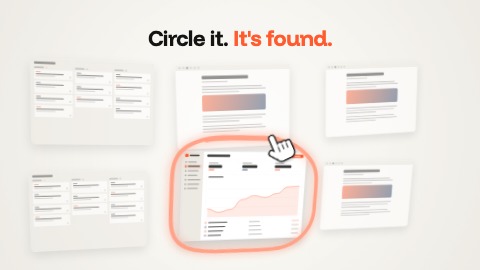 Circle to pickYour pictures lie side by side; a hand circles one in a single stroke, in time with the music. The loop closes, becomes a frame, the picture leaps forward and its label is written.