Scenes
A scene = one idea on screen. You fill in its words and pictures.
 Phone and claimA strong line beside your app, in a 3-D phone. It turns in and lands in time with the music; then a hand presses its screen, it is seen from another angle, and the screen never stops living until the end.
 Laptop openingA laptop rises and opens on your screen, under a line: it is open right in time with the music. Then a hand presses the screen, it is seen from another angle, and the screen never stops living until the end.
 Floating windowYour interface in a window that floats in 3-D: it turns in and lands in time with the music, a hand presses it, it is seen from another angle, and what it shows never stops living.
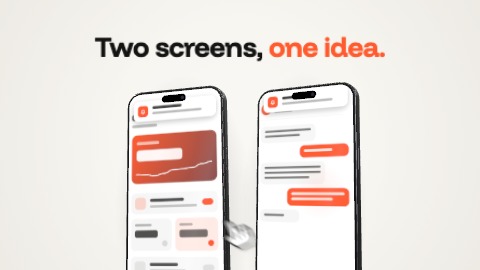 Two phonesTwo phones side by side, to show two screens of your app. They land one after the other, in time with the music; a hand presses one, the other answers, then both are seen from another angle.
 On every screenA laptop, a tablet and a phone: your product everywhere. They arrive one after the other, in time with the music, and each makes the others answer; then the same thing reaches the three screens, and they are seen from another angle.
 Scrolling phoneA phone whose screen scrolls, ideal with a long capture: a finger throws the page up in time with the music. It flies, brakes, and never quite stops.
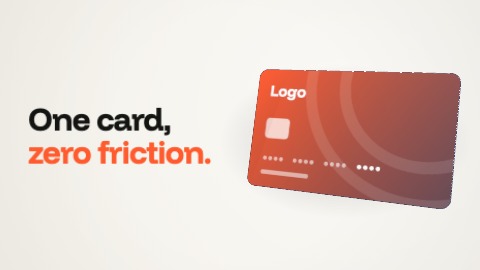 3-D cardA glossy card turning in the light: payment, membership, ticket.
 Icon with volumeYour logo on a 3-D tile that comes from the back, with the name under it.
 One clickA hand comes onto your screen and clicks, in time with the music: the screen takes the press, and a label is written to say what it does. Then the hand moves on and the label lights up until the end.
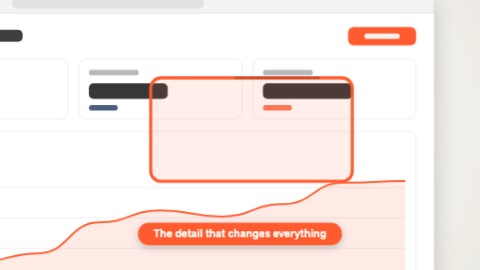 Zoom on a detailThe whole screen first, then the camera dives at once onto the detail that matters, in time with the music, and keeps moving in gently: a frame is drawn round the detail and its caption is written.
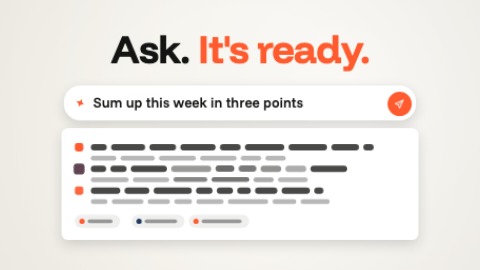 Prompt and answerThe title arrives in two halves, from above and from below, and bounces. The request is typed faster and faster into its field, is sent, and the answer streams under it: bars in your colours that turn into lines of text.
 Three screens fanned outThree captures rise one after the other and open like a fan, the middle one in front: each arrives tinted with your colour, then finds its own again, and they light up in turn, in time with the music.
 NotificationsNotifications arrive in time with the music in front of your blurred screen, closer and closer together: each one pops from below a little too wide, dips, takes its size and pushes the earlier ones up. Its words land right after, then the icons ring in turn.
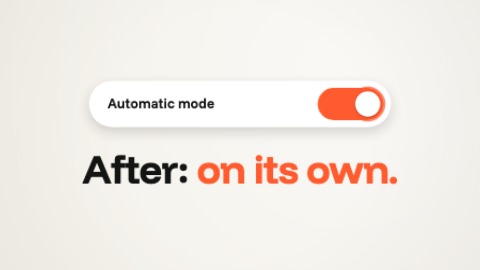 The switchA hand flips a switch, in time with the music: it gives under the finger, and the “before” line gives way to the “after” one, written word by word. The switch, now on, keeps living: a halo leaves it, a glint crosses it.
 One featureThe name of a feature types itself, one line says it, and the screen where it lives lands in time with the music. Then a line leaves the icon and plants itself on the place of the screen you aim at; a light runs it again until the end.
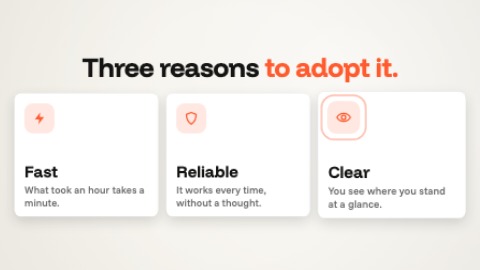 Three strengthsThree cards, one per strength: an icon, a title, a line. They arrive one by one, in time with the music: the first pops alone in two pushes, each one after it shoves the others aside, then the icons ring in turn.
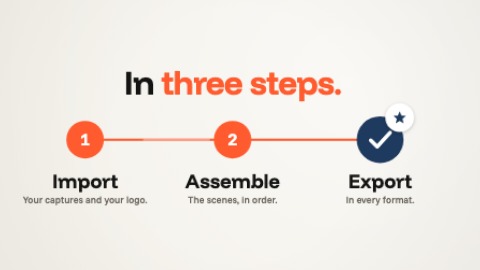 StepsThree or four numbered steps. A marker goes from one to the next, in time with the music: the line runs ahead of it, each step fills as it is reached and its name lights up; the last one ticks itself and is given a star.
 SpotlightThe screen lands, then goes dark at once, in time with the music, except the place you want to show: the pool of light closes on it, its label is written, and it beats with the music until the end.
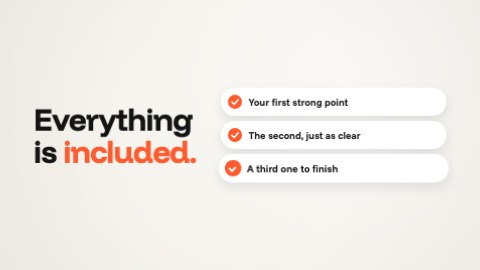 ChecklistA list whose lines arrive and get ticked one by one, in time with the music: each writes itself word by word, its tick lands on the music and the camera moves a notch closer.
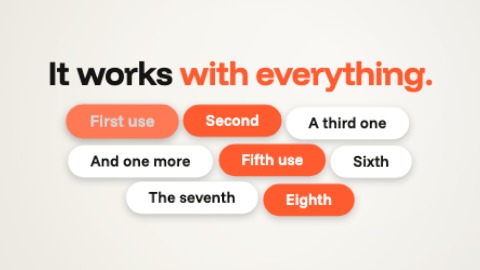 Cloud of labelsLabels burst in under a headline, in time with the music: integrations, uses, qualities. Each one jostles its neighbours as it lands and writes its word; then the cloud floats and they light up in turn.
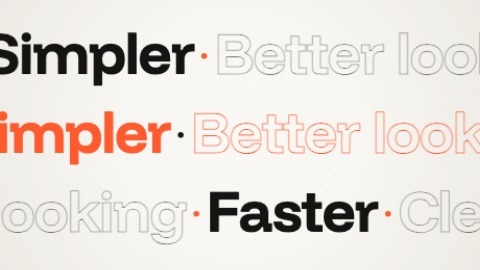 Running bandsThree bands of very large words running in opposite directions. They never stop; in time with the music, every other band is thrown on at once, lands a little past its place and comes back, and the camera moves a notch closer.
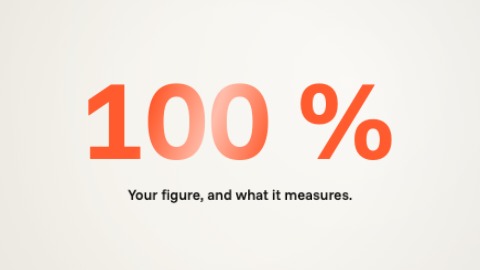 Big figureOne very large figure: it arrives larger than the frame, counts fast, brakes and stops on its value, on the beat. Its caption writes itself word by word, then its source; after that a glint crosses it and the camera keeps coming closer.
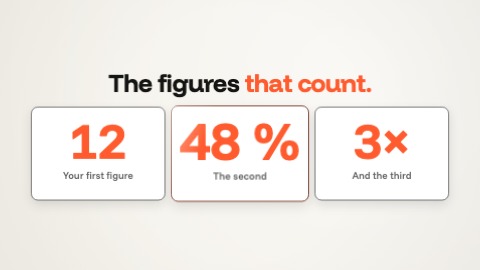 Three figuresThree figures side by side, each with its caption. They arrive one by one, in time with the music: each card shoves the others aside, its figure counts fast and stops on its value as the next one comes, its caption writes itself word by word. Then they light up in turn.
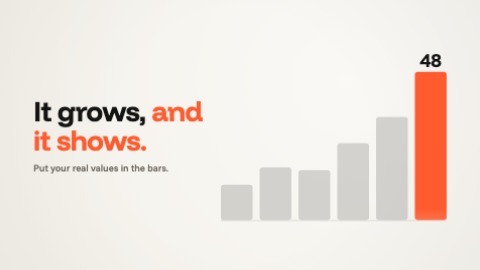 Growing chartBars rising in pushes, in time with the music, each a little after its neighbour; the last one, in your colour, carries its figure, which counts with them and stops on its value. After that a wave runs along the bars and the camera keeps coming closer.
 Price cardYour plan on a card, in time with the music: the price counts and stops on its value, what is included writes itself and gets ticked line by line, then the button lights up and a hand presses it. After that a glint crosses the price and the button, and the camera keeps coming closer.
 QuoteA customer's words, written word by word at the speed they are read; the quote mark draws itself, then their name and role arrive on the beat and the camera keeps coming closer. To fill with a real quote.
 Customer logosUp to six customer logos arriving as a wave, in time with the music, each one nudging its neighbours; then the wave keeps running: they lift and light up in turn while the rows glide. Only put real customers there.
 RatingFive stars filling one by one up to your rating, on the beat, while the figure counts with them; your caption and where the rating comes from write themselves, then the stars shimmer in turn.
 The mess beforeWindows fall askew one on top of the other, in time with the music, to the last picture: each one jolts the pile as it lands. Your line slams down over them: the problem your product solves.
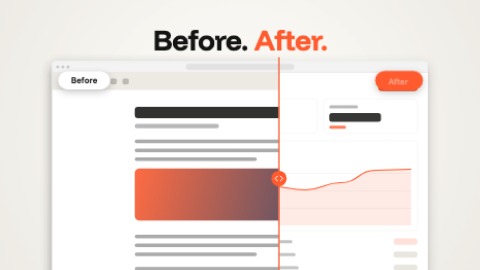 Before / afterA handle takes hold of the edge of the picture from before, opens it a little, then crosses the screen in one move and stops dead, in time with the music: the picture from after has taken its place. Each of the two words is written on its picture, and a glint returns to the one from after.
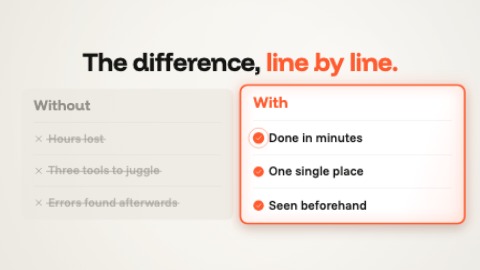 Without / withTwo columns: life without you on the left, with you on the right. The lines arrive in pairs, in time with the music: each “without” line is written, then its answer is ticked on the right and strikes it out. At the end the right column takes the light, and its ticks ring in turn.
 Wall of screensYour captures form a tilted wall drifting behind a line. It arrives thrown, brakes, then glides without stopping; in time with the music, one screen after another comes forward and lights up, and the camera moves a notch closer.
 Everything in orbitYour logo as a 3-D tile in the centre, with icons in a round about it, the near ones larger: the round arrives spinning, brakes, and the logo sends a spark to one icon after another, in time with the music: it jumps and takes your colour. Then the round spins up and the camera rushes at it.
 Logo revealYour logo pops in very large in the centre, crossed by a glint, and your tagline writes itself under it word by word, in time with the music. Then the glint returns to the logo, which gives a start with the music, and the camera keeps coming closer to the last picture.
 Logo and taglineYour logo large on the left, a rule, your tagline on the right: the rule opens and the tagline writes itself word by word, in time with the music, then a glint returns to the logo and the camera keeps coming closer to the last picture. Sober, to open or to close.
 End card with buttonYour logo large, your last line word by word, then a button a hand comes to press, in time with the music, and your address typed out. The camera moves in gently to the last picture while a glint crosses the button and the logo.
 End on the taglineYour tagline large, settling word by word, then your logo and your address, in time with the music. A calm ending: the camera moves in gently to the last picture while a glint returns to the logo.
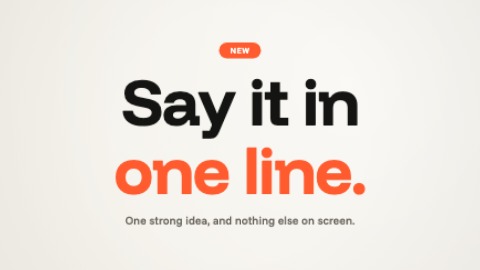 Big lineOne line, very large, written word by word: each word arrives low, pale and soft, then settles, and the key words take your colour. The small line and the label follow on the beat; then the line pulses with the music, a glint crosses the label and the camera keeps coming closer.
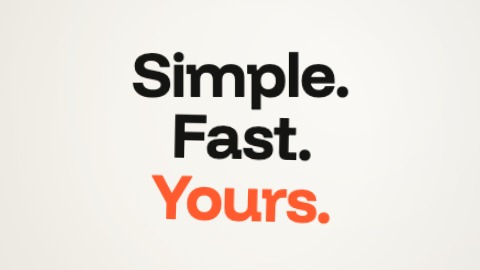 Stacked wordsTwo to four short words that land one by one, on the beat, spread over the whole scene. Each landing shoves the ones already there, then the pile sways with the music. The last one takes your colour.
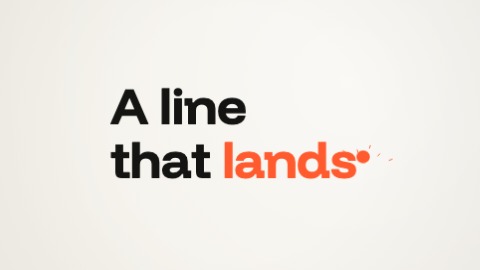 Punch lineWords arrive group by group, on the beat, flatten and bounce back. The full stop is a ball in your colour, which drops in last: your key words then take their colour, and the ball keeps bouncing on the beat, the line giving under it, until the scene ends.
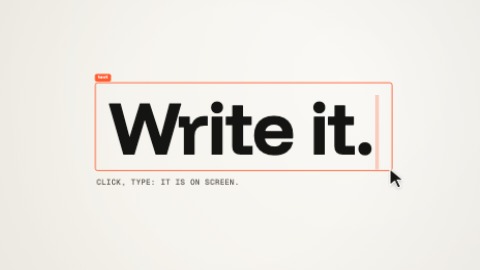 Typed in the frameA click opens a selection frame, then your words are typed in it faster and faster. The pointer comes back, pulls the frame by its corner, and your words grow with it. The frame and the words then give a start on each beat, the caret glowing, until the scene ends.
 Words in cutsTwo to four phrases, one per beat, each filling the frame on its own ground: yours, its inverse, your colour. Every beat is a cut.
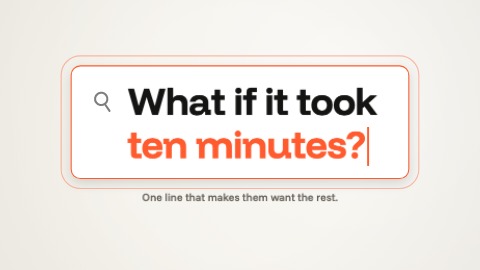 Typed questionA question typed faster and faster in a search field: the field grows with the words, the camera follows the caret from close, then pulls back to show the whole question and your small line is written under it. The field then answers the beat until the end.
 Changing wordA fixed line, and one word that drops into place, bounces and gives way to the next to give it several endings. The camera never stops moving in, and jumps at each word.
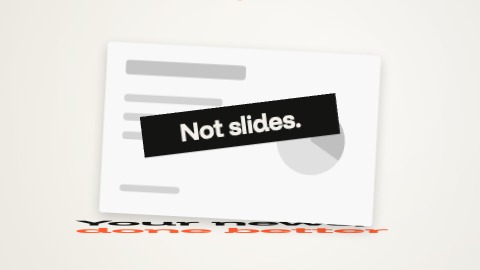 CrushedYour line's full stop jumps out of the picture; a dull slide drops on the line and flattens it, a band says no, then the full stop comes back down, breaks the slide to pieces, and the line stands up again. It then bounces on the beat until the end.
 3-D carouselYour pictures go round a 3-D carousel, one notch per beat, behind a selection frame that locks on the middle one. Once locked, the wheel still pulls on the beat and the framed picture comes forward, until the scene ends.
 The device landsYour capture drops into a selection frame, a laptop opens under it, the capture settles on its screen, then it turns and lands beside your line, right on the beat. Then a hand presses the screen, it is seen from another angle, and it is back in its place before the end.
 RestyleThe same scene in your film's style, then in three others, one per beat: nothing changes but the style. At each one the laptop gives a start, and the camera comes closer until the next.
 One content, four framesThe frame goes from wide to square to tall, a phone turns in and takes the tall one, the square and portrait versions land beside it, one after the other on the beat: the same content, recomposed in each. Then the two versions change places and the phone swings to another angle, on the beat, until the end.
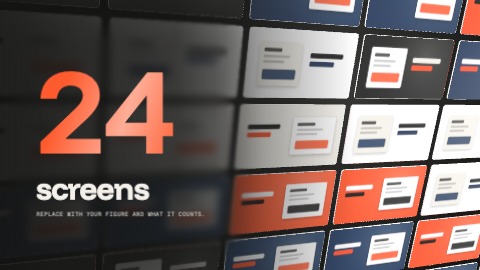 3-D wall and counterA tilted wall of your pictures, every other row sliding the other way, pushed on the beat, behind a figure that counts and stops right on the beat. The figure then gives a start with the music; then the wall stops, a frame closes on one tile, the camera goes into it.
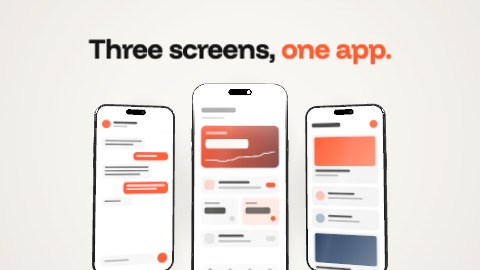 Three phones landThree phones fly in spinning, one per beat, and land side by side with a small bounce: each shows a screen of your app, under your line.
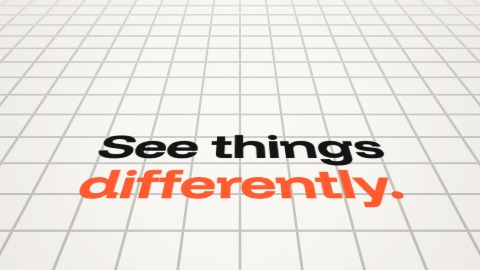 Words on the groundYour line lies on a gridded floor and the camera glides over it; on a beat, it stands up at once to face you. The floor keeps running under it, and it turns slowly and gives a start with the music until the end.
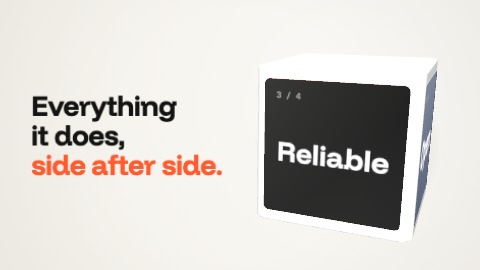 Four-sided cubeA 3-D cube turns a quarter at a time: each of its four sides carries one of your words, in one of your colours, beside your line.
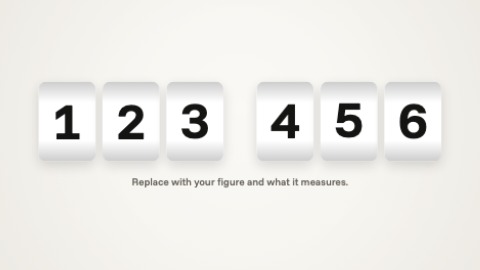 Rolling counterYour figure shows on drums that roll like a mechanical counter and stop one after the other, with what it measures underneath.
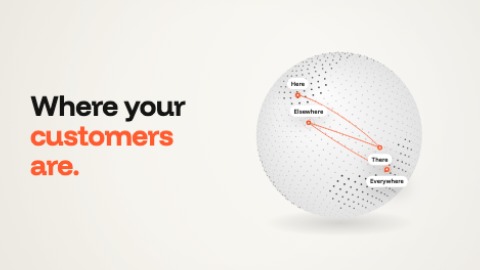 Around the globeA globe of dots turns beside your line: pins land on it one per beat, each with one of your words, and arcs join them.
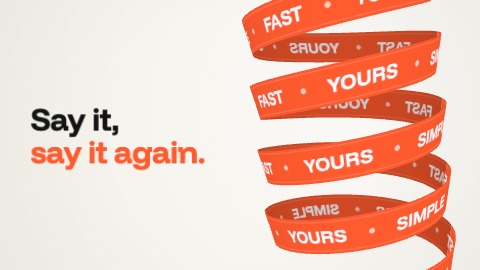 Ribbon of wordsYour words run along a ribbon wound in a spiral, in 3-D: you read them as it passes in front, and guess them backwards as it goes round behind.
 Screenshot from every angleYour screenshot on a 3-D screen, filmed by four cameras: three-quarter view, very close, from above, then facing it. The picture cuts to another angle in time with the music, and no angle stands still.
 Deck of screensThree of your screenshots standing one behind the other, like a deck of cards seen three-quarters on. In time with the music, the front one is thrown at the camera and out of the picture, the next takes its place, larger, with a word that slams; the last one stays alone and comes closer.
 Words that slamTwo to four phrases written one behind the other, in depth. In time with the music, the camera flies to the next one: the word on screen grows until it leaves the picture, and the one that waited far away arrives and lands full size. One faces you, one lies on the ground, and the last one stays, underlined in your colour.
 Logo spinYour logo on a thick 3-D tile comes spinning from far away, skips and lands in the centre, in time with the music: a ring of your colour bursts from the floor, your name slams in under it, your tagline follows. A complete ending in two seconds, and the tile keeps turning slowly if you hold it longer.
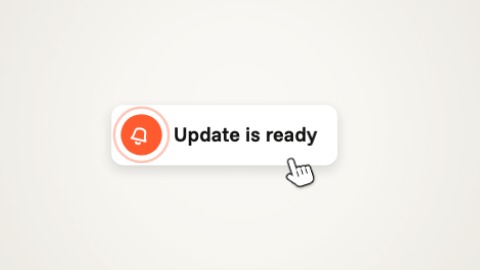 A single notificationOne notification alone on the ground, as wide as what it says: it slides into place, its message writes itself word by word and the card grows with it, its icon rings in time with the music. Then a hand tumbles in, lands under the line and runs back along the words, which lift off one by one.
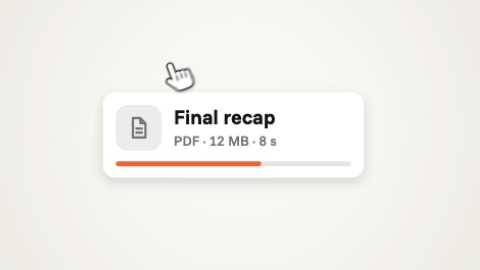 A file on its wayOne file card alone on the ground: its tile drops into place, its name writes itself word by word, its details follow, and its bar runs as far as you say and stops there (at 100 the tile ticks itself). A hand tumbles in above the card, comes down on the name and sweeps it away. Held longer, the bar gets there push by push, in time with the music.
 A single buttonOne button alone on the ground: it forms with a spring, takes its label word by word and swells as the words land, then breathes. A hand comes up from below, turning, and presses it in time with the music: the button jumps and takes off through the top of the picture, faster and faster.
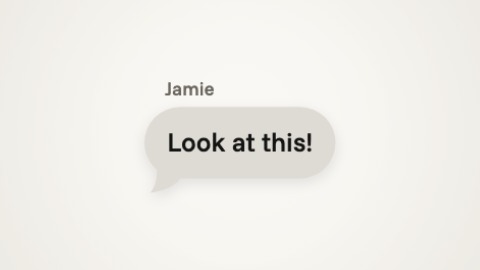 One bubbleA single message bubble on the ground: it arrives tilted and blurred, swings into place and bounces softly. Its words land almost together, in your colour, then settle; above it the sender's name types itself letter by letter. Then the bubble grows, faster and faster, and rushes at the camera.
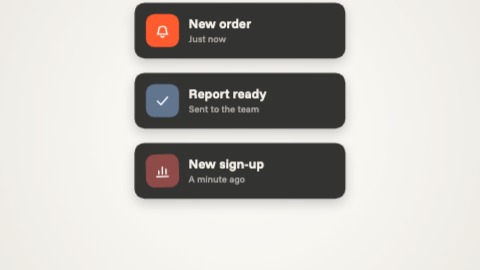 A column of notificationsNotifications pile up on the ground: each one pops from below, a little too wide, dips, takes its size and pushes the earlier ones up. Its words land right after, one by one. They arrive in time with the music, closer and closer together, and the column never stops climbing: at the end it grows and rushes out through the top of the frame.
 A search in one gestureA line draws itself, takes your colours, swells into a capsule and closes into a dot; a search field comes out of a blur while the camera pushes in twice; the dot jumps over it, drops in and becomes its caret. Then your sentence is typed faster and faster: the camera runs after the caret, whips, throws itself onto the emphasised words, and pulls back to show the whole line. Before a cut the field stretches into a banner across the frame and closes. Unlike “Typed question” and “Search and results”, the field is made in front of you and the camera follows the typing.
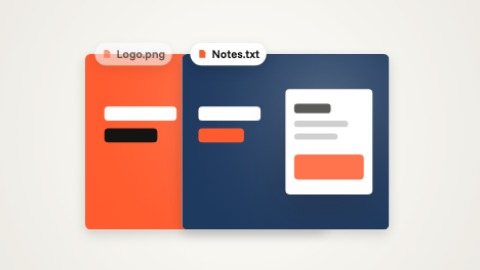 A burst of resultsA small status chip: an outline runs round it, a word is typed in it, a ring spins beside it. Then it opens into the first result, a card first tinted with your colour that takes its true colours; the next ones whip in from the side, in time with the music, each over the one before, which slides behind and fades. Your pictures, or example cards while there are none. Unlike “Search and results”, no field and no list: cards that chase one another.
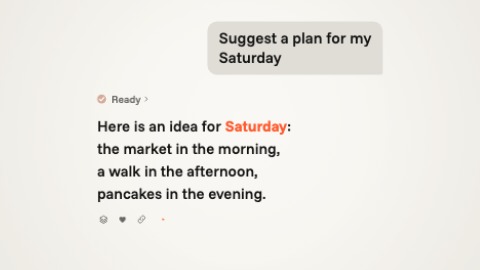 The assistant at workA request types itself in a card and a hand presses send: the card melts into its message, blurred and coloured, and lands in the upper right. Under it the steps of the work come in time with the music and tick one by one, then the list folds into one line and the answer writes itself in its place: bars in your colours that turn into the text, or a table that fills cell by cell. The page never stops rising.
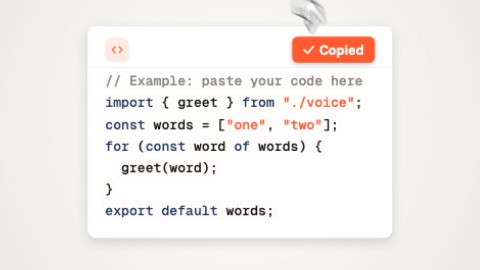 Code cardA card of code rises into the picture and your snippet types itself in a breath, one line after the other, too fast to be read: the speed is the point. Its keywords and its strings then take their colours in a wave, and a hand comes to press the button, in time with the music: it answers with a tick and its second word. Unlike “Terminal”, nothing runs: this is code you show, and copy.
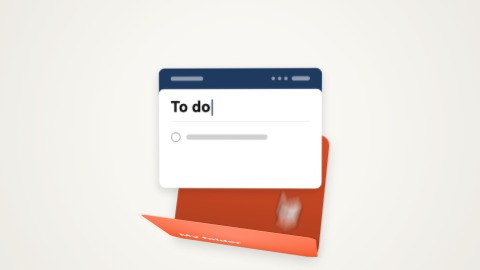 A folder opensA folder in your colour slides into place, a hand takes it, its flap opens towards you and what it holds comes out: a note, whose title types itself while it rises, or your pictures, which burst out, hang for a moment and drop into a tidy grid in a panel that stretches. The folder falls away, and only the note or the pictures are left.
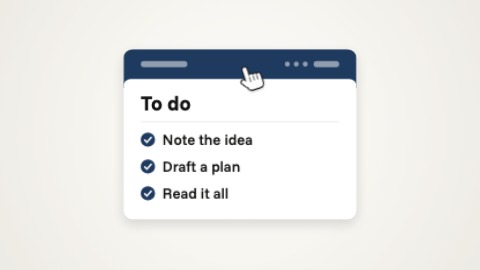 A list that writes itselfOne note alone on the ground, and its list writing itself in front of you: each row comes word by word, in time with the music, then its box ticks itself, and the card comes a little closer at each row. A hand lands on the band and drags the card down: it closes into a bar and leaves. Unlike “Checklist”, the rows are not there at the start: they get written.
 Line and zoomYour sentence writes itself word by word on a line that slides, and its emphasised words (failing any, the last one) arrive in a plate of your colours. The slide speeds up, the camera throws itself at the plate, brakes hard, then keeps creeping in, with a kick in time with the music.
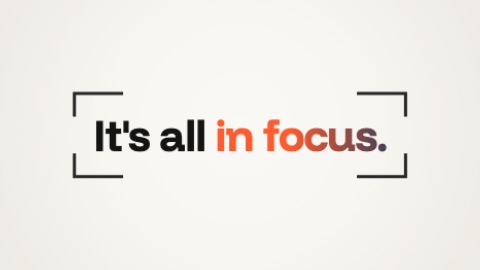 Words in the viewfinderFour corner marks, as in a viewfinder, close on a short word. Then the frame stretches in one go to hold your whole sentence, which is written behind it letter by letter. In time with the music its emphasised words (failing any, the last one) take your two colours, and the frame starts to close again.
 Travelling lineYour sentence is set so large that it does not fit the picture: the camera runs along it while it is written word by word, whips over the last words, brakes, keeps gliding with a shove in time with the music, then shoots off to the side. The emphasised words (failing any, the first one) take your colour. In a tall frame the sentence is stacked and the camera comes down it.
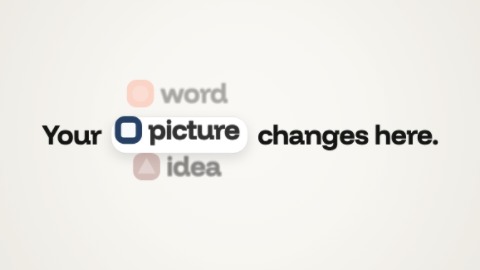 A chip in the lineA sentence with a gap, and in the gap a chip: a small mark (or your picture) and a word. The chip turns like a wheel, in time with the music, to show your words one after the other, and the rest of the sentence closes up or opens to its width. Unlike “Changing word”, the word sits in a chip, in the middle of the line, and the line moves with it.
 Giant wordThe emphasised word of your sentence (failing one, the last) crosses the picture huge, so large that only a few of its letters fit. Then the same word arrives small, in its place, and the rest of the sentence closes in around it: two sizes for one word, in time with the music. In a longer scene, the start of the sentence is written first.
 Question and answerTwo sentences in the same place. The first writes itself word by word, its last word in your colour, then falls away: it shrinks towards the centre, faster and faster. The second sweeps in from the side, larger, brakes while it is written and comes towards you, with a kick in time with the music. Before a cut, the camera goes through it.
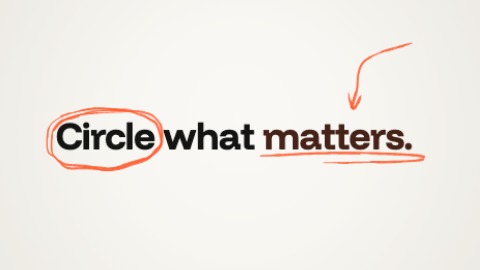 Annotated lineYour sentence writes itself word by word, faster and faster, while a pen annotates it by hand: a loop, a line, a box round your emphasised words, an arrow, strokes that live from one picture to the next. Then the key word (the last emphasised one, failing any the last word) bursts in, large inside a spiky ring, in time with the music.
 Letter by letterA short word is spelled out, one letter more each time, in time with the music: its letters stand far apart, from one edge of the picture to the other. In the middle of the word your logo (or an icon) arrives edge-on and flips round, then punches up while a disc of colour grows from behind it and floods the picture. The grounds are your colours, all at the same lightness.
 Scattered lettersAn ending drawn by hand. The letters of your sentence float small, scattered over the whole picture, while a pen circles those of your emphasised word (failing any, the last) one by one. Then, in time with the music, they pull together and grow: your sentence is there with a loop round it, and your logo comes in under it.
 Round of iconsYour icons in a round, seen from the side: the near ones are twice the size of the far ones, and the middle stays empty. The round arrives spinning, brakes, and a ball of ink strikes one icon after another, in time with the music: the icon jumps and takes your colour. Then the round spins up and the camera rushes at it. Held longer, the camera runs along the round from very close, then the round seen from above bursts and ink covers the icons one by one.
 Word and iconOne word, typed at once behind a block that leaves a caret, beside an icon with volume: it is filmed from one angle, then another, then another, in time with the music. An accent in your colour goes with it and changes each time: a star that throws rays, a beam that widens, or small signs that pop out round it. Made to follow itself: three words, three icons, three accents.
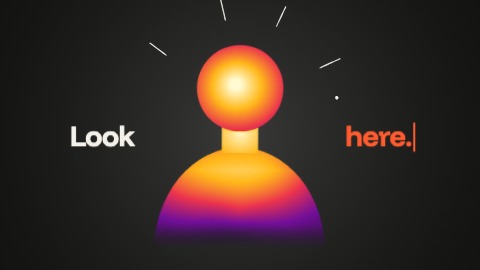 Subject as a heat mapYour picture (a product, a portrait, a screen) in the false colours of a thermal camera on a dark ground: it comes out of a blur, warms up and never keeps still. Your caption is cut in two, one half on each side: a first word is typed, erased at once, then corrected. At the end the heat drains away from the top, and a front travels down the picture turning it to its negative: only a pale shape is left on a light ground.
 ClockA clock fills the picture, pulls back at once and moves aside while its hands spin at full speed to the time you write; they settle there with a small bounce and your line lands beside it. Then time runs: the thin hand moves on in time with the music, and a ring leaves the face each time.
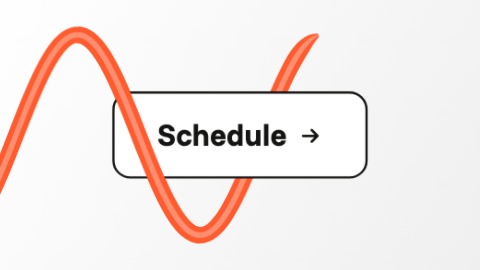 Run of buttonsA run of buttons, one per card: the picture cuts in time with the music, faster and faster. The button keeps its place and its size, and each card has its own backdrop and its own small animation: an interface, glass over a colour that flows, ripples, a ribbon that passes in front and behind, a wall of bricks in which it is the lit one. The last card beats once and leaves its button between four corner marks.
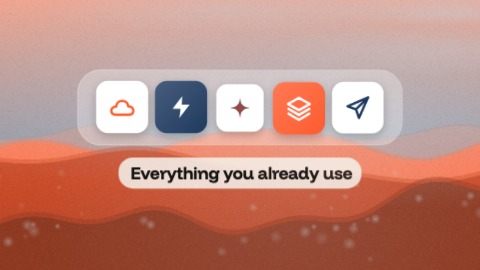 Burst of iconsYour icons on white tiles, in a row over a full-frame picture: the first one pops alone in the middle and a ring of light leaves for the edges, then the others burst out to its left and right, in time with the music. The row shrinks while the picture pushes in: the two move in opposite directions, which gives depth. Without a picture of yours, a soft landscape in your colours.
 BeamYour line lands word by word, your icon pops, drops to the bottom of the picture and opens a beam of light upward: your screenshot appears in it and sharpens. Then everything swings away and the camera lands in your screenshot, lying at an angle in space, which brakes and then recedes; your icon comes back in front of it. Four gestures in a second, in time with the music.
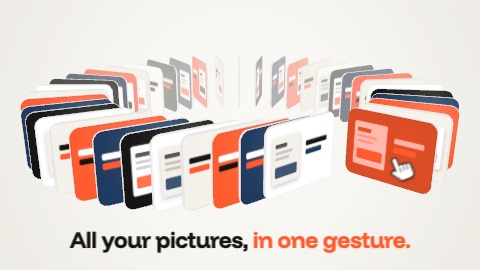 Ring of picturesYour pictures standing on a ring, like the cards of a rotary file. First a sunburst of thin lines in your colours, then the camera swings to the side: it is a carousel, turning. A hand parts it like pages being turned, one picture is uncovered and takes your colour, and the camera dives through the ring. Seen from above, your sentence is written in the middle.
 A line of tilesYour pictures on thick tiles standing one behind the other, in a line that starts close by and runs away into the picture. The line comes up from a corner, a hand lands on the first tile and sets it going like a conveyor, in time with the music; then it glides up the line and waits: every tile that passes under its finger lifts and lights up in your colour. The hand leaves, the line runs on.
 Constellation of screensYour first screenshot fills the picture, then the camera lets go of it and pulls back, faster and faster: five more screens burst in from every side, each at its own depth, and the whole set slides past the lens, the near ones much faster than the far ones. A short phrase lands in the middle (up to three, one after the other). Held longer, the camera pulls back again and more screens arrive.
 Screens and ribbonsYour screenshots standing side by side, like panels seen three-quarters on, on a gradient of your colours. A ribbon of your colour runs behind them, a second one slips in front of one and behind the next, panes of glass stand between them. Everything comes out of a blur, then the camera travels along the row, from one screen to the next in time with the music: the near ones sweep past, the far ones barely move.
 The phone stands upTwo words land large, as a double image, and go on shrinking. A phone comes up from under the camera, huge and almost flat: it tilts up, recedes and stands in front of them, your screenshot on its screen. Then your icons burst out from behind it and float around it, in time with the music. At the end the picture may drain to grey, right before bad news.
 Tunnel endingYour logo and your tagline, written behind a soft bar in your colours. Your pictures fly in from behind the camera on every side, line up along a tunnel and recede towards the centre, slowly, without ever stopping. A button and your address to finish.
 A line rewrittenYour logo (a dot in your colour if you have none) runs along a first line and rewrites it: behind it the second is already there, ahead of it still the first, and under it the letters are out of focus. The line comes down to the centre and doubles in size. Then the logo runs back, faster and faster, and what it leaves this time is your signature: your logo and your brand's name, in time with the music.
 Logo from barsA line thickens, rises into a block, then splits into twelve bars. Each bar slides and lengthens in its own way: they are the strips of your logo, which draws itself in front of you, settles to its true shape and steps aside to let your name out from behind it. Your tagline lands under it, and a wave runs through the strips in time with the music. With no logo, the bars draw your name.
 Logo, jolt, nameA small square in your colour tips onto its corner and bursts into a rounded tile, in a gradient of your colours, your logo in it, while it finishes turning level. It gathers itself, then everything jumps for an instant, in time with the music: squares, the tile stretched, torn into streaks. And your logo is there, clean: it steps aside, and your name comes out from behind it letter by letter, your tagline under it. Before a cut, the whole thing shoots up and out.
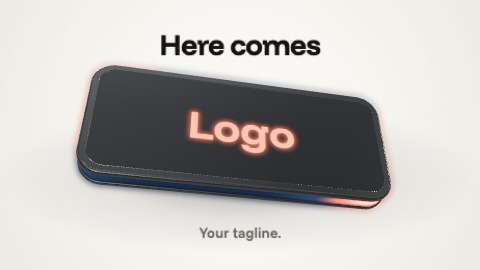 Logo on a slabTwo or three words are written, large. Then a thick 3-D slab drops from above the camera, its edge lit from inside by a gradient of your colours: it lands on the sentence, tips up, and your words jump above it. Your logo is cut into it: the logo ends the sentence. The slab keeps turning, its light keeps running round the edge in time with the music, and your tagline settles under it.
 Logo like a coinYour logo comes in from the side, seen edge-on, turning on itself like a coin: it brakes, faces you and keeps gliding. The words of your tagline spring up beside it one by one, in time with the music, and push it aside: the whole ends up centred. Before a cut, everything closes in on the middle, slowly and then at once. You can start with the words, and set your logo on a disc: a real coin, with an edge in your colours.
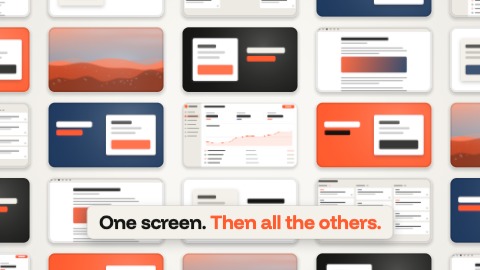 One of manyYour capture fills the screen, swells for an instant, then drops to a third of its size at once: it is one tile of a wall. Its neighbours pop in round it as flat tints in your colours and become your other captures. The wall never stops receding, a wave of colour crosses it, and it drops again: nine screens, fifty, two hundred.
 A wall wakes upA dense wall of your pictures fills the screen edge to edge. It is born along a diagonal, each picture first as flat tints in your colours, then a second wave makes them true. A veil comes down, your line is written on it, and a hand crosses the wall: the pictures it passes light up again, and a few stay lit.
 Wall and wordHundreds of small pictures packed into a wall, seen through the bulging glass of an old screen, with its lines and its dark edges. In the middle, a disc in your colour and one very large word, replaced at once by the next, in time with the music; the last one stays longest. The picture comes closer faster and faster and rushes at you just before the cut.
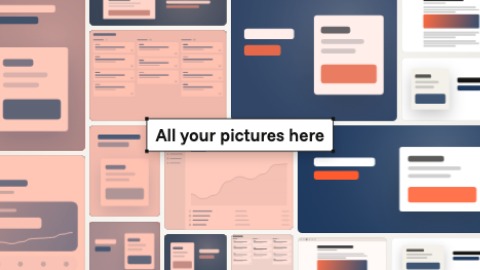 A wall fills upYour line is written word by word in a selection box that widens with it, in the middle. Meanwhile your pictures fly in from every side and tile the screen around it like masonry. A wave tints them in your colours, then a second one, in time with the music, gives them back their true colours. In a longer scene the wall steps back and dashed outlines group a few pictures, each with its caption.
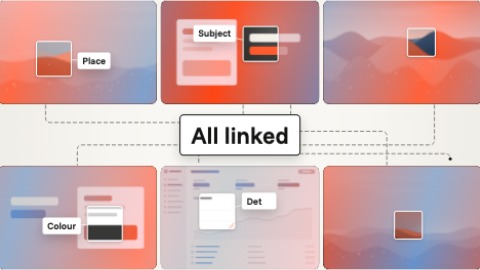 Four coloursSix of your pictures round a title in a box. They come in their true colours, then the whole set takes a tint, and changes it in one go, in time with the music, up to four times: your colour, your second colour, the one between them, then both flowing together. With each tint the title is written again and small tags land on the pictures. Under the last one, dashed lines join the pictures to one another.
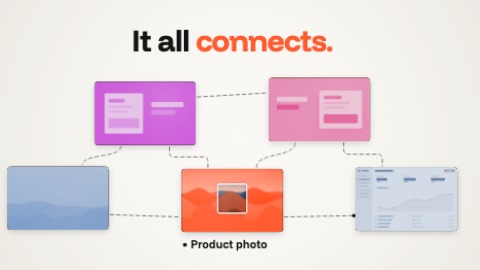 Linked picturesYour line above a few of your pictures, joined by dashed lines. Everything arrives sliding and never stops. One picture is picked: it takes your colour, a box closes on it, a caption is written beside it. From there the dashed lines draw themselves from picture to picture, in time with the music. In a longer scene the view steps back: more lines join the pictures into a small network and each takes a pale tint.
 TreeA menu that unfolds row by row, in time with the music: a dashed line leaves the title, the row arrives at its end all at once, and the whole menu steps up. Beside it, your pictures stacked in space change places at each new row, then go on turning slowly. Write one line per row, with a dash in front of those filed under the one before. A short scene shows fewer rows, a long one shows them all.
 Control roomYour title in the middle of an interface at work: a window with your screenshot, turned in space, level meters that jump in time with the music, sliders that travel, three bars and a marker running along them, a small histogram that breathes. Half-way the title changes: solid bars cover its words for an instant, the slider panel tumbles a quarter turn, and the next title appears. Write two titles: the last word of each is set large, the rest small above it.
 Circle of facesYour title in the middle, its key word in your brand's two colours, with up to eight round pictures of different sizes around it, each with its badge. The whole group rises from the bottom of the picture, out of focus, sharpens and settles; then the circle tightens round the title, each picture drifting a little on its own, and one of them swells in time with the music. Before a cut it collapses towards the middle line until it is no more than a slot. Only put real people there: your team, real customers.
 A window that changesAn icon draws itself out of two dots on a small tile; a hand presses it, the icon runs through your colours, and the tile grows into a window. Inside, your pictures follow one another in time with the music, each one rising from below as the one before leaves through the top; beside it a word names each of them as it rolls: the old one takes a tint and goes, the new one comes up flattened, stands up and settles.
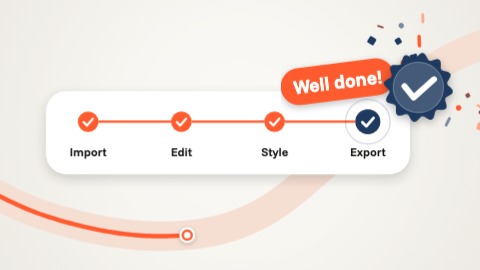 Steps and a rewardA card of steps gliding across the picture: a marker goes from one to the next, in time with the music, each step fills, ticks itself, and its name lights up. At the last one a seal pops out with a shower of small shapes in your colours and a word. Behind the card a second marker draws its line along a wave.
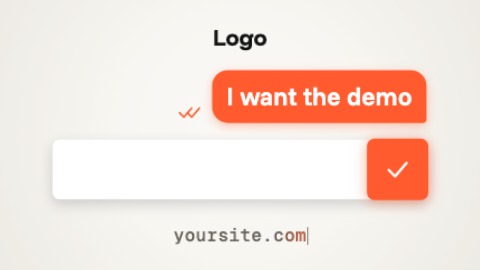 Message sentAn ending shaped like a message: your logo, a bar in which your line types itself in one go, then a hand presses the send button, in time with the music. The button takes your colour and turns once on itself, the line leaves the bar upward in a bubble, and your address types itself underneath.
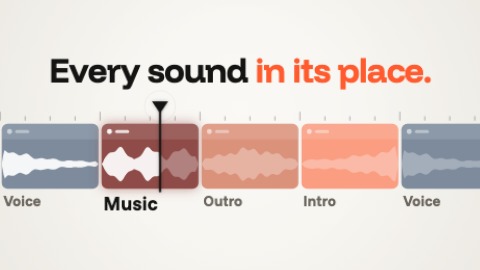 Scrolling stripA strip of named clips scrolling under a fixed marker at constant speed: in time with the music each clip passes under the marker, lights up, its sound wave fills and its name grows. Your title above. For anybody who sells sound, video, or anything that unfolds over time.
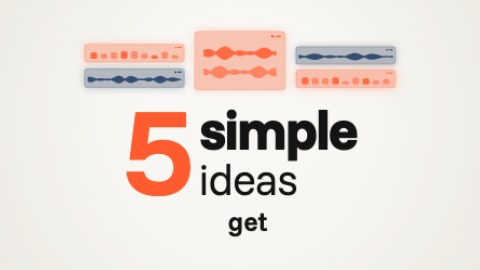 Title in three sizesA title set in three sizes and two typefaces: a figure or a first word very large, a heavy word, a light word. Each part appears at once, in time with the music, with no slide and no fade. Under it, one small word at a time, cut to the next. Above it, small glowing panels come in from one side, then the other.
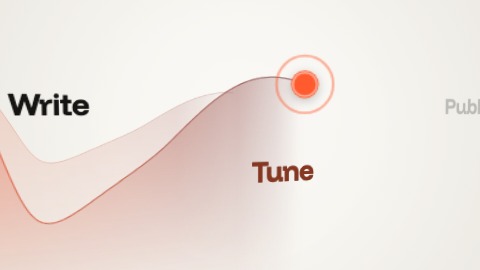 WaveA short line types itself in the middle; a dot of your colour springs from it and draws a soft wave as it runs. The camera follows it and looks down the wave as it runs away into the picture: your words wait along the way and light up one by one as it passes, in time with the music. At the end the dot becomes a card that rushes at the camera, a quarter too large, and settles, with your picture or your title.
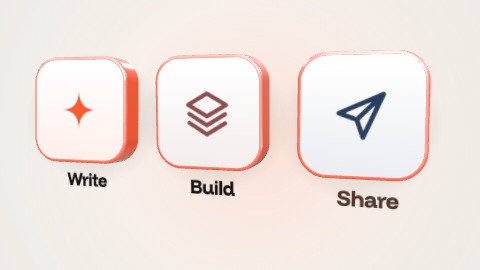 Tiles that pushThree thick 3-D tiles, each with its sign or your picture and its word. They arrive one by one, in time with the music: the first pops alone in two pushes, each one after it shoves the others, which squash a little and recover. Then the whole row rolls over a quarter turn, like a drum, and comes back in your second colour, with other words if you write some.
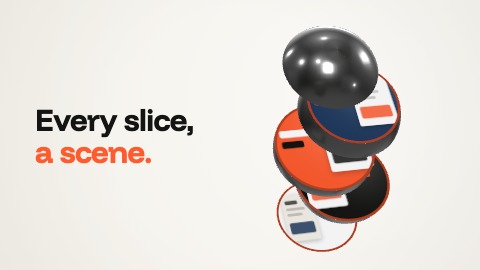 ProSliced objectA ball in your colour fills the picture. Lines of light run round it, then, in time with the music, it is cut: its slices part with a bounce, lean towards you, and every cut face takes one of your pictures, from the bottom up. To finish, one slice comes round to face you and the camera dives into it: its picture fills the screen. You choose the shape (ball or pebble) and the cut: across, seen from above, or upright, side by side.
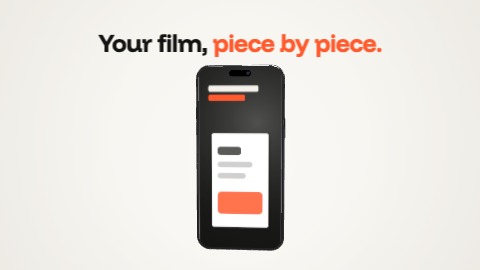 ProPiece by pieceThick tiles, each one of your pictures, fall tumbling one after the other, in time with the music, and land end to end on the floor like a timeline. The row stands up into a folding screen, folds shut into a pile, the pile turns to face you and becomes a phone: the first tile is its screen. You choose the angle: from above or skimming the floor.
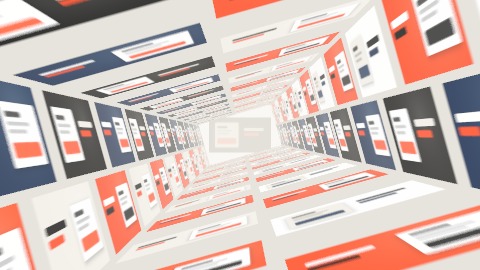 ProCorridor of picturesThe camera rushes down a corridor whose walls, floor and ceiling are lined with your pictures; your line waits at the far end, the camera creeps towards it, then rushes through it; the corridor tilts a little on the way; at the far end, one picture faces you and comes up to fill the screen.
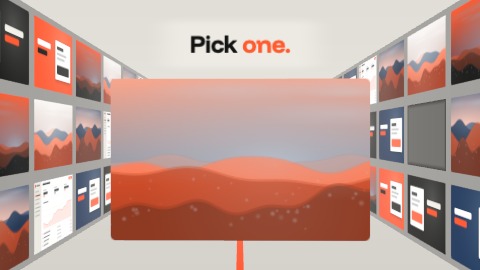 ProOff the wallA corridor whose two walls are covered with your pictures; the camera moves slowly down it. One picture peels off its wall, flies without slowing and lands in front of you with a bounce. Its place stays empty in the wall. You choose the wall and the row it comes from.
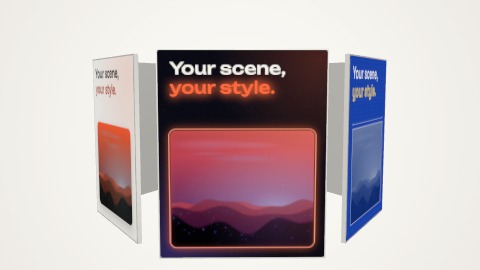 ProCrown of stylesYour scene, your line and your picture, on cards standing in a crown, each in another style of the library: night, poster, paper, blueprint… The crown draws back, flies round once, slows notch by notch with a click, and stops square in front of you on the style you choose, which comes out of the crown.
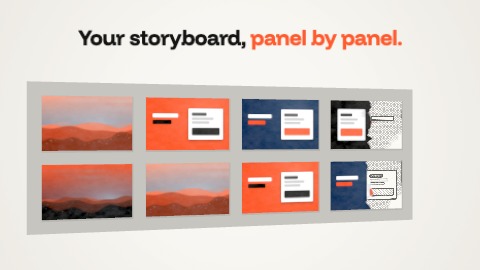 ProStoryboard drawing itselfA storyboard pinned on a board, its panels made of your pictures. They are drawn in pencil column after column, in time with the music: the outlines, then the hatching. Then a wave of paint with a wet edge crosses the board and gives them back their colours. You choose the number of panels.
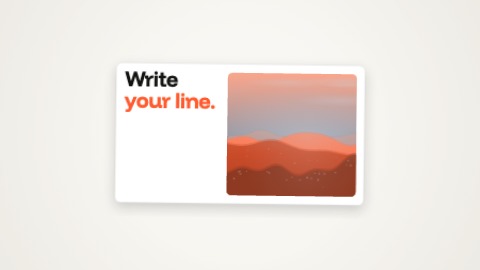 ProYour words into the filmA film is waiting, its title and its picture still empty. Your line is typed in a field beside it, then the field dives into the film: your line becomes its title, the frame jolts on the impact. Your screenshot flies in and dives into the film's picture in turn. The film starts to play.
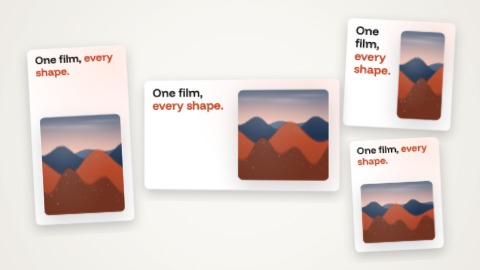 ProThe other frames slide outYour film, in the shape of your frame. On the beat, its other shapes slide out from behind it one after the other, each one recomposed for its place, your line and your picture inside, and land with a bounce. They float for a moment, then go back behind it, and your film comes forward alone.
 ProBreathing sliced logoYour logo on the face of a thick block, cut upright into slices. The slices fall from above one after the other, on the beat, each at full speed onto its place, and bounce: your logo is whole. Then the block breathes: a wave runs along it, its cuts open on your colour and close behind it, and it turns a little to show its depth. Your line is written under it.
 ProThe full stop becomes the filmYour line is typed large; its full stop is a shape in your colour that comes last. It waits a beat, gathers itself, then your picture comes out of it: your words pour into the full stop, which opens on it and grows in one sweep into a large card that lands with a bounce.
 ProGalaxy of picturesYour pictures are the arms of a galaxy turning round one point, from the corners of the screen far into the distance, seen through a lens: what is not in focus stays soft. The galaxy starts fast and slows down; one picture escapes it, rushes at you and lands under your line with a bounce, and everything else goes soft behind it.
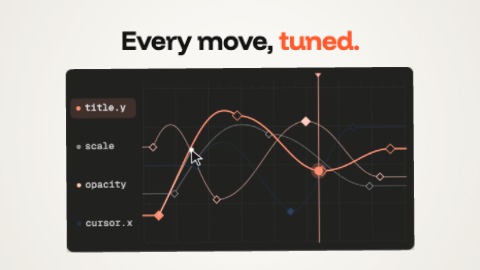 ProCurve editorWhere every move is tuned: a curve editor arrives at an angle and turns to face you; its curves draw themselves, one per track (the tracks' names are yours); a line of light moves on, every point it crosses lights up and a dot in your colour rides the chosen curve. A cursor pulls a point's handle: the curve gets its bounce. Then the editor tilts away into depth.
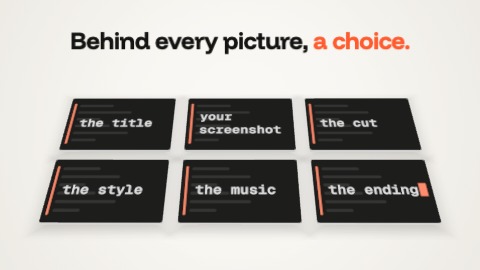 ProBehind the scenesYour pictures lie on a table, seen from above. A wave tips them one after the other: each lifts, lands on its back with a bounce, and a line of your list is typed on it, what the picture hides. Then a second wave puts them back face up, or they stay on your words if you choose.
 ProPictures into your logoYour pictures float round the screen; on the beat they fly one after the other onto a pile and land flat on it; the last card falls from above: your logo. The pile turns to face you, its layers edged in your colour, and your line is written under it.
 ProLiving mosaicA wall of your pictures that fills the screen and never stops: rows of tall tiles and wide tiles, each sliding its own way, at its own speed and depth, while the whole wall slowly draws back. In the middle your figure counts on reels or your word lands, with your small line. At the end every tile pours into the title, the farthest last. Three viewing angles.
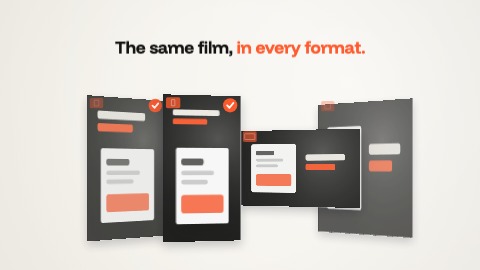 ProFormat carouselYour picture in the four shapes of a film (wide, portrait, vertical, square), on four faces that flow like record sleeves: the front one straight, its neighbours turned and set back. The row moves one format at a time, in time with the music: each gets its check as it comes to the front, then it whips back to the shape of your film, which comes forward and becomes the whole picture.
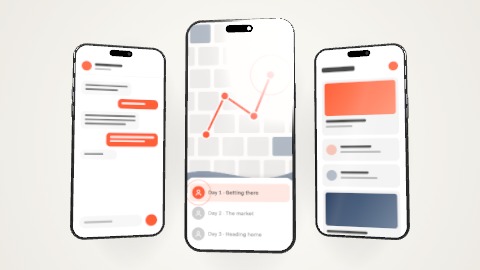 ProScreen comes aliveThree phones land on the beat, then the camera dives into the middle one and your screen comes alive close up: a route is drawn from stop to stop, then the members of the group light up one by one, each with its line of your list and its colour. The camera draws back in one gesture towards the next scene.
 ProRising wordOne giant word, in a glow of your colours: warm at its heart and cool at its edges, each letter is uncovered from its baseline up, one after the other, while the word grows from a third of its size to its full size. Then it comes a little closer and leaves speeding up, still moving as the scene ends.
 ProBursting ringYour pictures burst out round your line. With your labels on small pills, first in two tones of your colours, then in their own, the ring settles, widens and turns slowly, each picture on its own orbit; it gives a kick when the line that follows takes the first one's place, then falls into its middle and becomes a sphere of light. Head on, or in orbit seen from above.
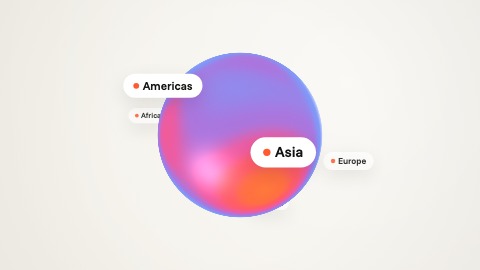 ProThe letter becomes a globeA giant word is written from the top down; its letters are erased but one round letter, which grows into a sphere in your colours. Your labels turn round it in depth, the near ones larger, the far ones behind it, then the camera rushes into the sphere.
 ProPointing listA list in large type beside a glowing card. The word pointed at steps out after a small step back and turns from grey to ink, a bead of your colours before it; the whole card, which changes with the word, rises out of the picture and the next one comes up from below. Head on, or the card turned towards the list.
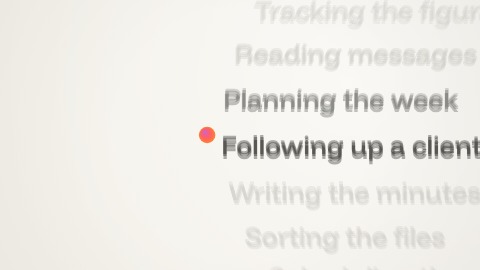 ProWheel of tasksYour tasks on a wheel seen edge on: the line by the dot in ink, the others pale, those above and below curving away. The wheel moves one line at a time, faster and faster into the cut, and the dot swells into a bubble in your colours.
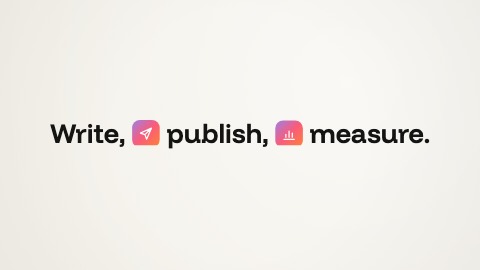 ProThe line opensYour line, written group by group: each group arrives in your colours, then turns to ink; then it opens: the words move apart and two icons rise from behind the line into the gaps. It leaves by growing, faster and faster.
 ProWall in depthA wall of your pictures that looks flat until the camera moves: each one hangs at its own depth. The camera pulls back, then sweeps sideways twice; the near pictures slide faster than the far ones, and the far ones are slightly out of focus.
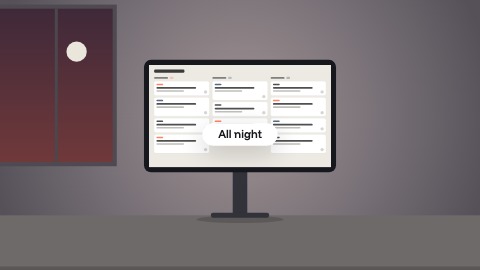 ProPull back from the screenYour screenshot fills the picture, then the camera pulls back: it is the screen of a monitor on a desk, in a room whose window goes from day to night, while a pill on the screen says your first line, then the second. At the end the whole picture closes onto that pill.
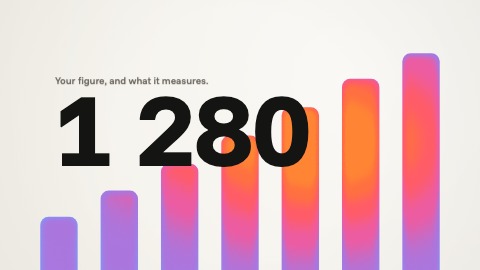 ProFigure over barsYour figure, very large, over a row of rising bars in your colours. Its characters come in one after the other, in your colours then in ink, its last digits roll up to the value slower and slower, never past it; then everything drops off the bottom of the picture, speeding up.
 ProThe glow becomes a pillA soft glow of your colours behind your words: seen through reeded glass, it opens behind your first words, which light up letter by letter; with the next words the glow hardens into a pill, then the pill shrinks into a small capsule the next scene can take over.
 ProIn the makingA word and a small thumbnail beside it, on the same line: its picture changes very fast, as if things were being made one after another; then the word is deleted letter by letter from the right, the thumbnail slides into its place and the camera rushes at it, so that it reaches the middle large, ready to be the next scene's picture.
 ProGiant fieldA huge input field on a field of your colours: behind ribbed glass, its right end running out of the frame, your address types itself letter by letter with its caret, then the camera pulls back faster and faster into the cut.
 ProWord framed in picturesYour pictures burst in round your word. The camera pulls back from your word and its switch, your pictures packed edge to edge like a frame, first passed through the gradient of your colours, then in their own; the switch turns on in your colour, each picture lives at its own depth, then the camera draws away, faster and faster, into the cut. Head on, or the frame tilted.
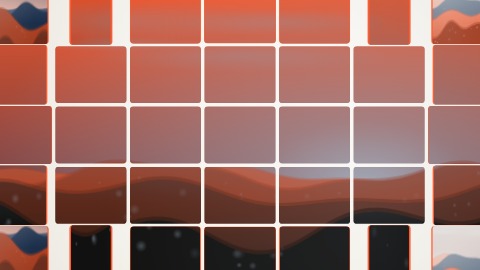 ProMosaic waveYour pictures turn over into one picture. A wall of your pictures packed across the screen; a wave turns every tile over like a card, a thin edge of your colour showing as it turns, and on its back each tile holds its piece of one big picture: the joints close, the big picture stands whole and your line lands on it. From the middle or from a corner.
 ProFusing wordsA few words, one after the other in the same place: each one pours into the next. For an instant the letters melt into a single drop, then the next word comes out of it, sharp. The first one rises out of the drop as the shot begins; the last one, your name or your point, stays in your colour. The camera never stops moving in.
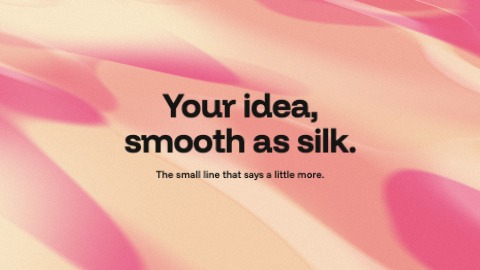 ProSilkThe whole picture is a sheet of silk in the shades close to your colour, leaning a little and twisted, whose folds rise and slide slowly; your big line and your small line are written over it. The edges of the colours are crisp in places and soft in others, like light on satin.
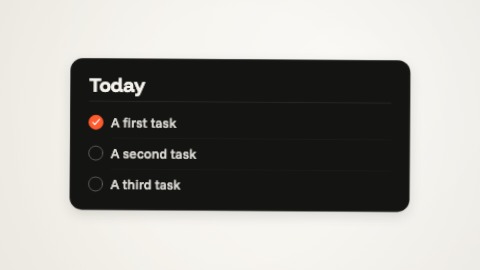 ProOne shape, three rolesA single rounded shape is a button, then a card, then a panel, in the same shot. A small press, and it changes width, height, corners and colour without ever growing larger; what it holds fades out and back. Between two changes something breathes: a light crosses the button, the card's sign turns, the panel's rows are ticked one by one.
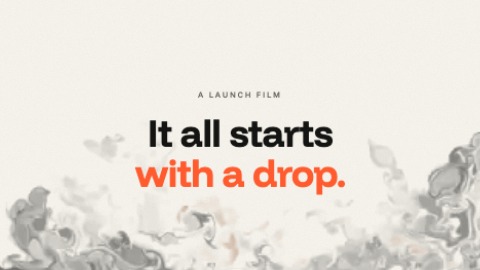 DropThree drops of ink fall into water, tear into filaments and settle; your line appears where the ink has passed. The third carries your colour.
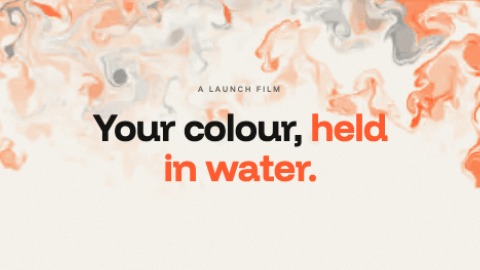 PlumeYour colour and a milky white rise in plumes through dark water and wind round each other; your line lights up where they have passed.
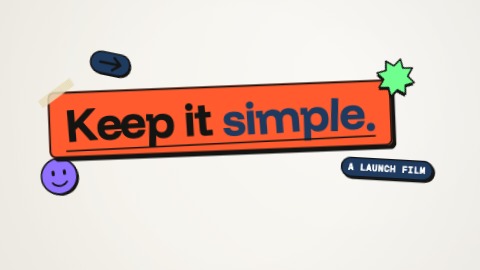 ProStickersA block of your colour, ringed by a thick line and a hard shadow, slams onto the page with its strip of tape; your line is stamped onto it letter by letter, the small line arrives on a tilted sticker, and three stickers snap on around them on a stiff spring.
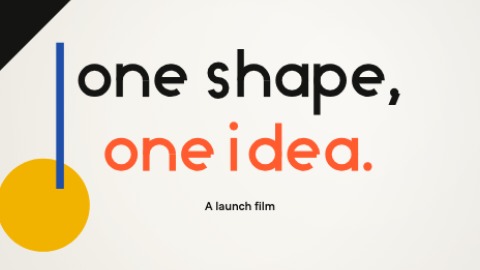 ProCompositionYour line is built letter by letter from stems drawn with a ruler, arcs drawn with a compass and discs; behind it a disc, a bar and a triangle in primary colours, yours among them, recompose in time with the music.
 ProOrnamentsGold ornaments open on your line: a fan above it, stepped rules drawing themselves from the middle out to both sides, your line rising letter by letter from the centre, a stone of your colour under it; a sheen crosses the gold.
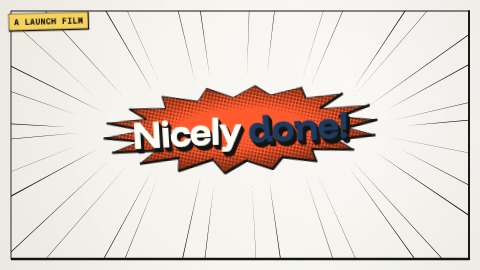 ProShoutYour line is shouted: a spiky balloon in your colour, shaded with dots and inked, slams into the panel among speed lines; the letters come in one by one; a yellow caption box slides into the corner with the small line.
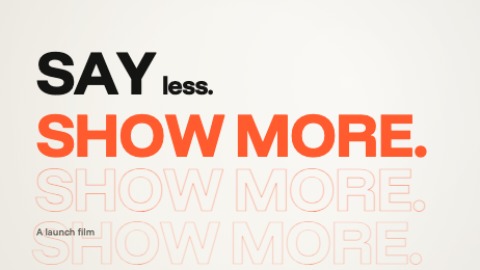 ProFalling wordsThe words do what they say: the first line's letters fall and squash, its last word arrives large then shrinks, the next line whips in from the side and multiplies down the frame in outline; your key words take your colour.
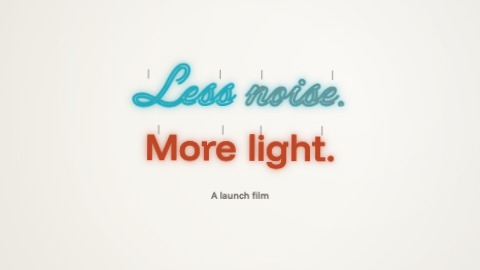 ProSignYour line in glass tubes on their clips: it lights up word by word, one word hesitating before it holds; a white core and a halo, the first line in a script of a second neon colour, the rest in your colour.
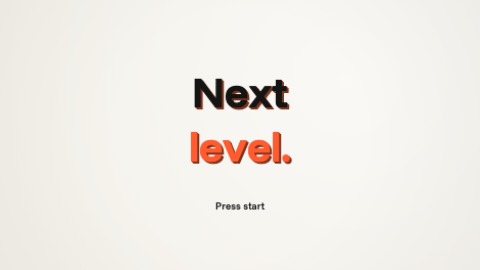 ProGame titleA video game's title screen: the letters drop one by one and bounce on a depth of your colour, a title's wave runs through them now and then, and the small line blinks below.
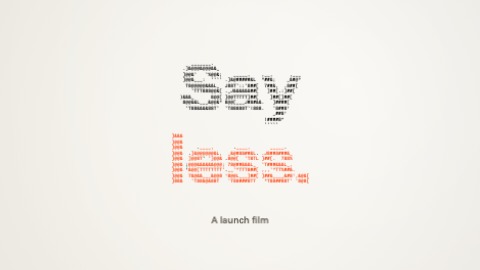 ProLetters in charactersYour line in big letters made of characters: each cell takes the sign whose shape follows the letter; a print head writes it, then a lamp's light slowly crosses it. Your key words in your colour.
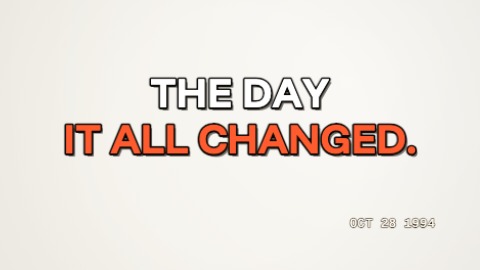 ProCamcorder titlerThe words a camcorder's titler burns into a home video: big white capitals with a black rim appearing letter by letter, your key words in your colour, the date in a corner; the picture held by hand.
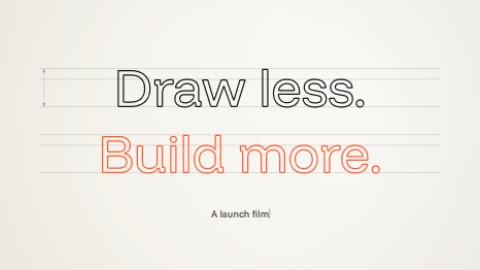 ProPlotted titleYour line plotted as on a drawing: the construction lines first, along a ruler, then a pen follows the outline of each letter in a plotter's order; the cap height is dimensioned. Your key words in your colour.
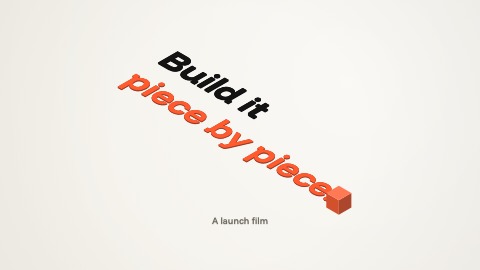 ProLetters laid downYour line laid on the floor of an isometric model: letters thick as plaques fall one by one with two small bounces, and the cube in your colour is the full stop.
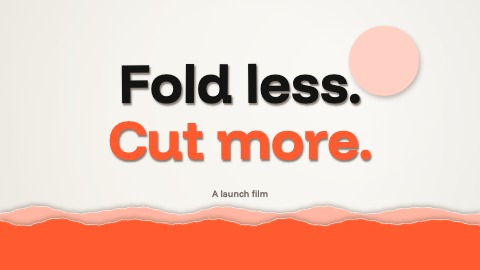 ProPaper seaYour line cut from thick paper folds up, letter by letter, out of a sea of torn paper; it sways a little on its hinges, and so do the waves before it. Your key words in your colour's paper.
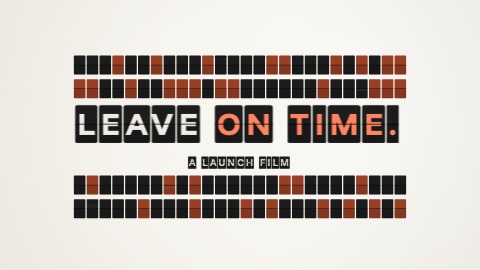 ProDeparturesYour line is written on a departures board: each letter turns over several times on its two halves and stops on its own, left to right, with the clack of the flaps; your key words on flaps of your colour.
 ProDropped lettersA heavy bar with your small line drops and bounces; then the letters of your line are let go from above, fall with a spin, tip over and stand up straight on the bar; then a marble in your colour rolls along the bar.
 ProLetter swarmYour line is a swarm of grains of light: they whirl in, wheel round and settle on the letters, then never quite stand still; your key words in your colour.
 ProLiquid lettersA pool in your colour lies in the frame: the letters rise out of it one by one, liquid, and stand sharp while the pool draws in to a bar; now and then a drop forms under the bar and falls.
 ProHalo riseA soft field of your colour ramp swells behind your line, seen through fluted glass, and your words rise on it in white, letter by letter; then the field breathes and drifts.
 CountdownThree, two, one: each figure lands on a beat, inside a ring that empties. Then your line drops and the ring bursts.
 The dateA calendar whose sheets are torn off faster and faster down to the day you announce, which lands on the beat beside your line; after that the corner of the sheet lifts, the day pulses with the music and the camera keeps coming closer.
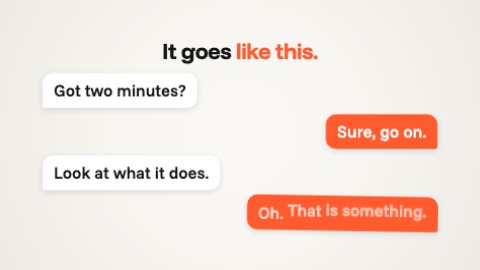 ConversationMessages answer each other, left then right: three small dots, and each bubble pops up on a beat.
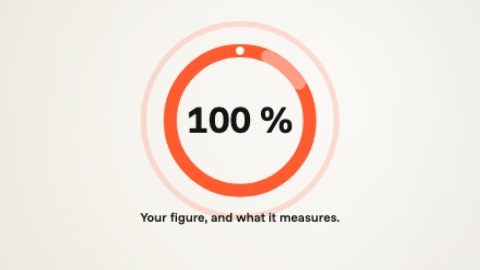 GaugeA ring fills in two pushes, on the beat, up to your percentage while the figure counts in its middle and stops on its value; its caption writes itself word by word, then its source, and a light runs round the ring to the end.
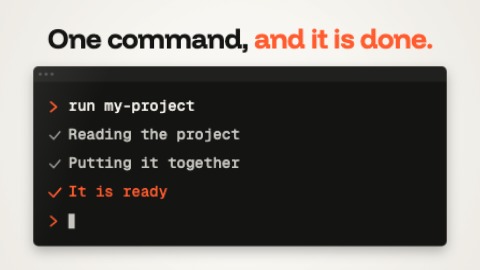 TerminalA command is typed faster and faster into a terminal and runs in time with the music: its lines of output drop at once, one a frame, then tick themselves one after the other; the last, in your colour, says it is done.
 From a message to the appA conversation fills the picture, one bubble after the other, in time with the music. A hand presses the last message: it turns over and becomes your app's icon, which rings until the end.
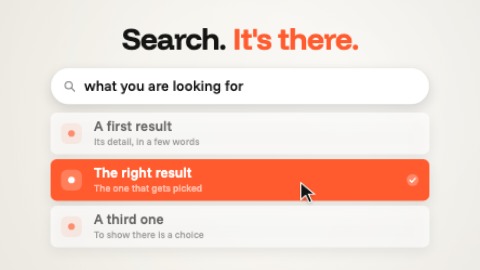 Search and resultsA search is written into a field, word after word; the results whip in from the side one after the other, in time with the music, each one jostling those before it. The pointer picks one and presses: it takes your colour.
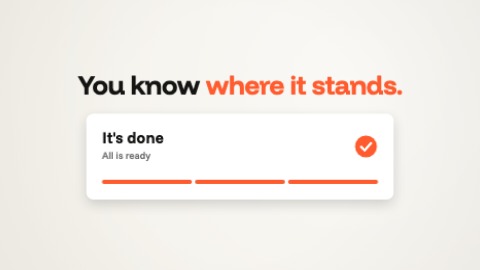 In progress, then doneA card says where things are: the bar fills, the words change at each step, and the last one ticks itself.
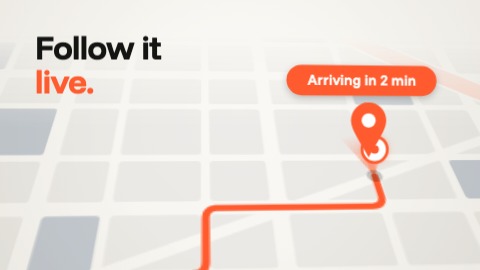 Route on a mapA map in your colours, lying in space: the pin drops, its label is written, and a marker runs the route in time with the music, from one crossing to the next, the camera swinging round with it. Three viewing angles.
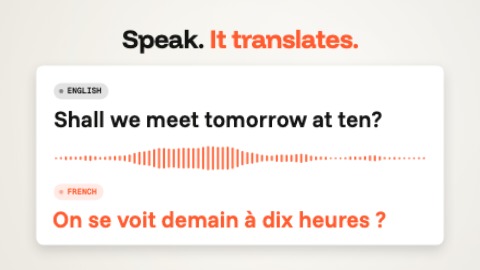 Two languages, liveA sentence is said and written at once; a wave runs under it, and the same sentence comes out below in another language, a few words behind. The wave then swells again in time with the music, until the end.
 Circle to pickYour pictures lie side by side; a hand circles one in a single stroke, in time with the music. The loop closes, becomes a frame, the picture leaps forward and its label is written.
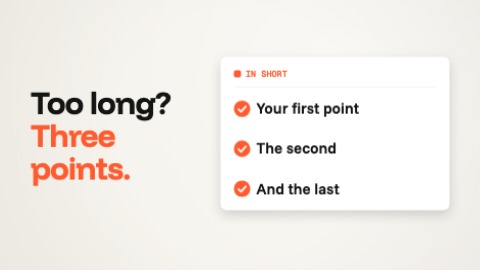 From long to shortAn endless page scrolls by in jolts, then folds up at once, in time with the music: all that is left is a card and three points, written and ticked one by one.
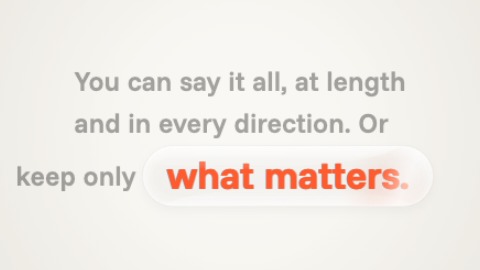 Glass loupeA drop of glass falls on your text, runs over it in bounds, in time with the music, magnifying what it passes, and stops on the words that matter: there it breathes and the light turns in it until the end.
 Stacking logoYour logo comes down in slices that stack with a bounce and takes its place. Then, on the beat: your last line is written word by word, a button pops, your address is typed, a pointer presses the button. Until the last frame the slices shiver, a sheen crosses the button and the camera keeps coming closer.